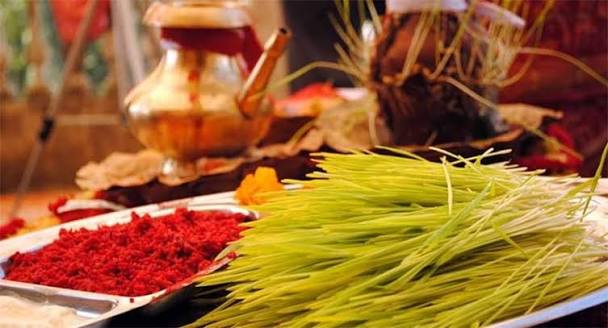
Jhapa — Red tika on the forehead, yellow jamara behind the ears, the hands of elders on the head, and a heart full of blessings—this sight, seen on Vijaya Dashami, the main day of Bada Dashain, represents the authentic identity of Nepali society. Dashain is not merely a religious ritual; it is a symbol of warmth and affection handed down through generations, bringing families together under one roof and uniting hearts separated by distance.
Throughout the year, family members remain engaged in their respective spheres of work, but they return home on the occasion of Dashain. The enthusiasm of relatives returning from employment, education, or other pursuits, along with the eager anticipation of receiving tika from elders, renders the festival all the more special.
On Vijaya Dashami, it is customary to receive red tika and yellow jamara from the senior-most members and elders of the family while taking their blessings. The red tika is regarded as a symbol of power, victory, and prosperity, whereas jamara signifies vitality and growth. The blessings for good health and success offered by elders as they apply tika deepen the intimacy across generations.
Children who once received tika from their parents and grandparents grow up to enter a generation that bestows tika and blessings upon their own offspring. In this manner, the tradition keeps family values and cultural identity alive through the ages.
The essence of Dashain is not confined to returning home alone; it also lies in setting aside old grievances and reconnecting relationships. The festival offers a meaningful opportunity to meet relatives after long periods, share joys and sorrows, and renew bonds of affection.
However, Dashain may not be equally effortless and joyous for everyone. Due to the compulsions of employment, financial constraints, or living abroad, many are unable to sit beside their loved ones and receive tika. Therefore, the true spirit of Dashain abides not only in physically meeting but also in remembering distant relatives and nurturing feelings of goodwill.
According to mythological belief, Vijaya Dashami celebrates the triumph of truth over falsehood and righteousness over unrighteousness. It is associated with Goddess Durga’s victory over Mahishasura and Lord Rama’s triumph over Ravana. The messages of forgiveness, respect, and fraternity conveyed by this festival are equally vital in our contemporary social life.
With changing times, the style of celebrating Dashain has undergone subtle shifts. Following technological advancements, Nepalis living abroad or far away connect through video calls to give and receive blessings. While technology has bridged physical distances, the significance of sitting together in person with family to receive tika remains distinct and irreplaceable.
The tika on the forehead and the jamara behind the ears may fade in a few days, but the blessings bestowed by elders and the joy brought by family togetherness remain fresh in the heart for a long time. It is this shared warmth that embodies the true beauty of Dashain.